
Half-Inch Glass and Georgia's Pool Railing Code: A Lake Lanier Project

Updated: Aug 4
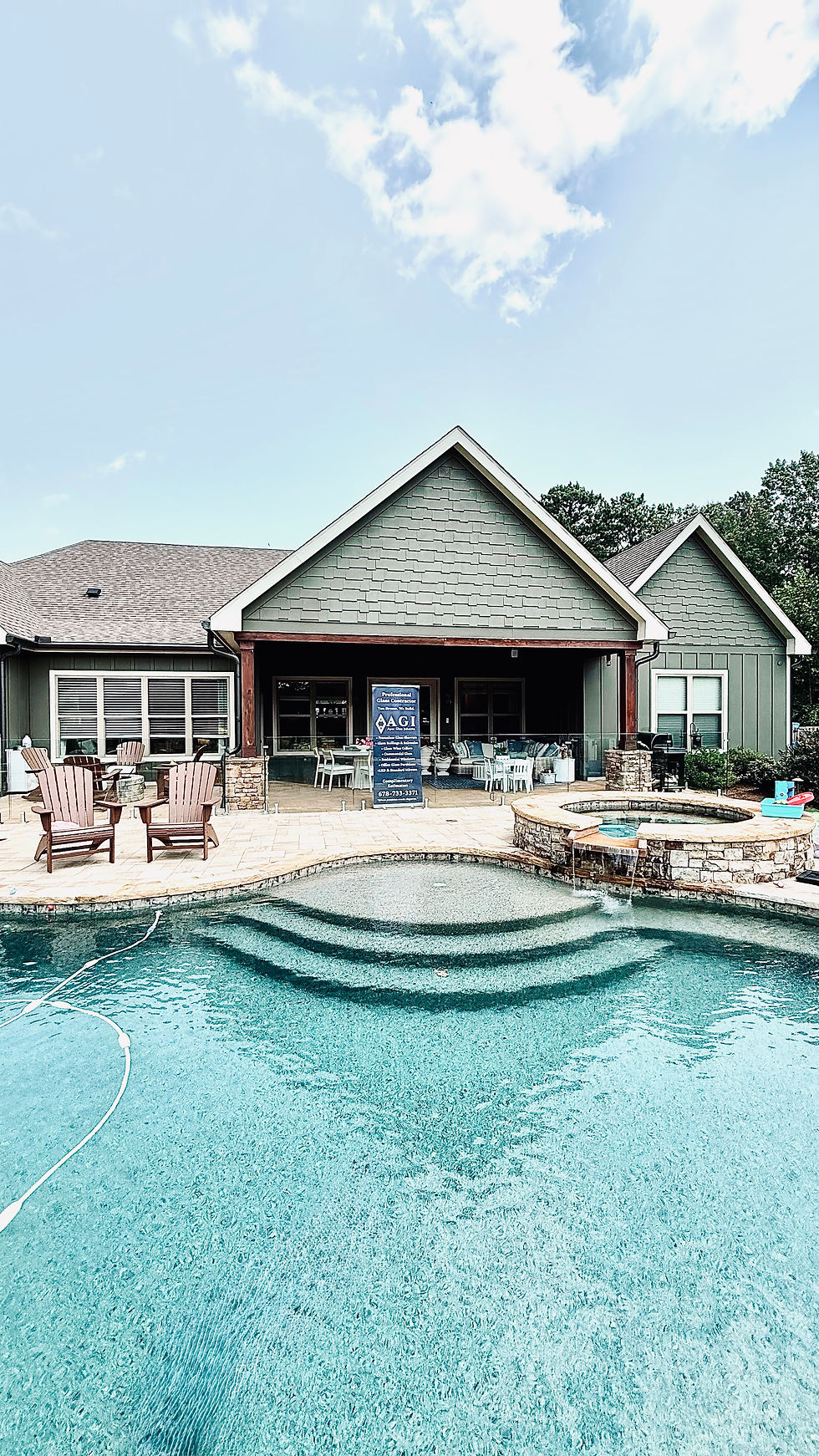
A glass pool railing can meet Georgia's safety code but only when height, panel spacing, and structural design are handled correctly, not just when the glass looks like a barrier. That's the question Alex hears constantly from homeowners planning a pool: does this actually meet code, or does it just look like it does? A recent project near Lake Lanier in Gainesville, Georgia, a half-inch tempered glass pool railing system, is a useful case for walking through what Georgia's code actually requires, and why the glass itself is only half the equation.
Georgia's Pool Barrier Code Sets a Higher Bar Than a Standard Deck Railing
Most homeowners are familiar with the general guardrail rule: a 36-inch-tall barrier wherever a fall of 30 inches or more is possible, under the International Residential Code that most Georgia counties adopt as their baseline. Pool enclosures are held to a stricter standard. Pool barriers are generally required to reach at least 48 inches in height, form a complete enclosure around the pool, and include gates that a
re both self-closing and self-latching. The gate must match the height of the surrounding fence — a shorter gate defeats the purpose of the barrier around it.
Because code requirements are set and enforced at the county level in Georgia, and can vary by jurisdiction, every project should be confirmed against the specific requirements of the county where it's being installed before final design. What follows describes the general framework; it isn't a substitute for that confirmation.
No Gap Large Enough for a Small Child to Pass Through
Height alone doesn't satisfy a pool barrier code. Spacing matters just as much. The standard test used across most adopted codes is whether a 4-inch sphere can pass through any opening in the barrier: including the gap between the bottom of a glass panel and the ground. A glass railing that's tall enough but sits an inch above a paver surface can still fail this requirement. On the Lake Lanier project, panel-to-ground clearance was measured and set specifically to close that gap, not just to hit a height number.
Why Half-Inch Glass, Specifically

Glass thickness for a railing isn't a style choice: it's a structural one, tied directly to panel height, span between supports, and the lateral load the barrier has to resist. Most codes require a guardrail system to resist a minimum lateral load applied at the top rail, and pool barriers carry the same structural expectation as any other guardrail, on top of their height and spacing requirements.
Half-inch tempered glass is a common specification for frameless pool railing systems for this reason: at typical pool-railing panel heights and support spacing, it provides the strength margin needed to meet load requirements without the added bulk of a thicker, heavier panel. Thinner glass can work in some configurations, but only when paired with closer post spacing or additional structural support, thickness and spacing are a single engineering decision, not two separate ones.
Mounting Method Changes What the Glass Has to Do Structurally
A pool railing can be built with a base-shoe channel system, where the glass sits in a continuous mounting track along the bottom, or with individual standoff posts or clips supporting each panel at fixed points. A channel-mounted system distributes load along the full width of each panel. A post-mounted system concentrates it at each support point. That difference affects how the glass thickness and panel width are engineered together — a decision made before fabrication, not adjusted afterward.
For the Lake Lanier project, the mounting method was selected specifically for a pool deck application, where the surface is regularly wet and the railing needed to hold up to exterior exposure without the hardware becoming a maintenance problem over time.
Exterior Glass Has Different Demands Than Interior Glass
A pool railing lives outside full-time — sun, rain, pollen, and temperature swings all act on both the glass and the hardware differently than an interior stair railing does. Hardware selection for an exterior, poolside application has to account for corrosion resistance in a way interior hardware doesn't, and the glass itself needs a mounting system that won't trap standing water against the base of each panel, which can accelerate hardware wear over time.
What This Looks Like Near Lake Lanier
Lake Lanier's surrounding communities have seen steady growth in exactly this kind of project: a pool deck where an open view matters as much as the barrier itself. A solid or heavily-framed fence would block the lake view the pool was likely built to take advantage of in the first place. A properly engineered glass barrier accomplishes the same legal requirement, full enclosure, correct height, no gaps a child could pass through, without trading away the view.
Part of a Larger Project

The pool railing wasn't the only glass work at this home. The same client brought Apex back to install a frameless glass shower inside the house as well — a smaller project, but built to the same standard as the pool barrier outside. A homeowner who invites the same fabricator back for a second, unrelated room is usually the clearest sign a first project went the way it was supposed to.
At Apex Glass Industries, we're proud to be trusted with projects homeowners have planned and looked forward to for years.
That responsibility is why we build to a higher standard. That's the Apex Standard.
Part of the homes, businesses, and projects shaping Georgia.
Frequently Asked Questions
How tall does a pool glass railing need to be in Georgia? Pool barriers are generally required to reach at least 48 inches, taller than the standard 36-inch guardrail height used elsewhere on a property. Exact requirements are set at the county level, so final height should always be confirmed with local building authorities before installation.
What glass thickness is used for pool railings? Half-inch tempered glass is a common specification for frameless pool railing systems, sized based on panel height, support spacing, and the lateral load the barrier is required to resist.
Does the gate need to match the height of the rest of the pool barrier? Yes. Pool enclosure gates are generally required to match the height of the surrounding barrier and must be self-closing and self-latching.
Is there a maximum gap allowed under or between glass panels? Yes. Most adopted codes use a 4-inch sphere test — no opening in the barrier, including the gap at the bottom of the glass, can allow a 4-inch sphere to pass through.
Do pool glass railings need different hardware than interior railings? Yes. Exterior, poolside hardware needs to resist corrosion and moisture exposure in a way interior railing hardware doesn't, and the mounting method needs to avoid trapping standing water against the glass.
Does Apex Glass Industries install pool railings outside Metro Atlanta? Yes. We serve Gainesville, the Lake Lanier area, and communities throughout North Georgia, in addition to Metro Atlanta.
Did Apex only install the pool railing at this home, or other glass too? Both. The same client also had Apex install a frameless glass shower inside the home, built to the same fabrication standard as the pool railing.
Measured, fabricated, and installed by the same hands. Let's talk about your project — call 678-733-3371 or schedule a consultation online.

Comments